

Design
Construction
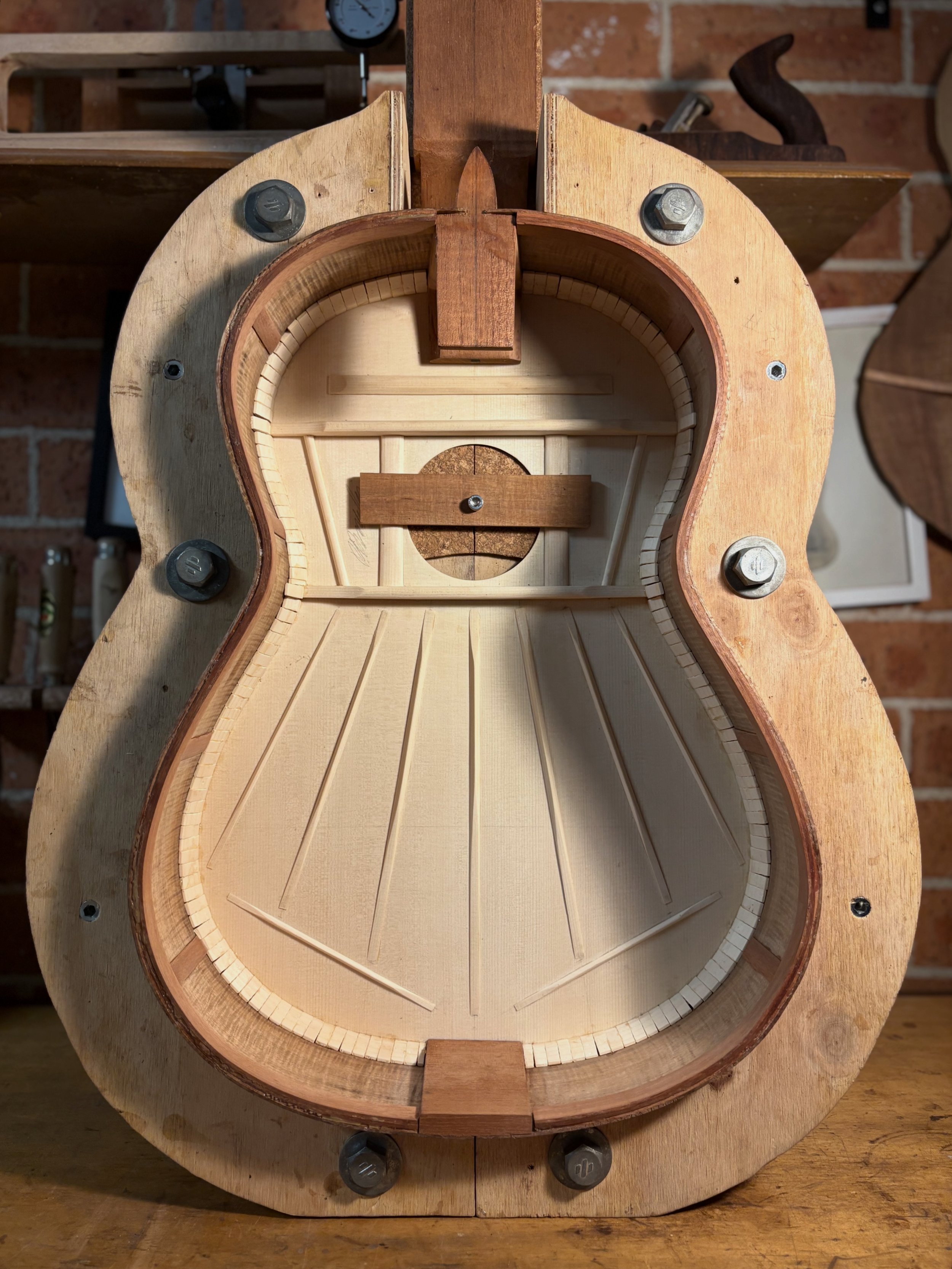
Each guitar is built using traditional Spanish construction methods. Assembly takes place on a solera, a shaped workboard that supports the soundboard and establishes the guitar’s geometry.
The neck and body are joined using a Spanish heel. The sides fit into slots cut into the heel of the neck, and the body is assembled around this joint. Hot hide glue is used throughout construction.
All components of the guitar are shaped and fitted by hand, with no computer controlled machinery used apart from a laser engraver for engraving the guitar’s label onto spruce.
Voicing
My approach draws inspiration from the Granada tradition, using a delicately graduated soundboard and fan bracing. The soundboard’s thickness and the dimensions of its braces are adjusted to suit the stiffness and weight of the individual piece of timber.
The aim is an intimate, resonant sound, with deep basses, rounded trebles and a sensitive response.
Timbers
I use European spruce, rosewood, ebony and maple, alongside Australian native timbers such as Australian red cedar and Queensland maple.
Timbers are selected for their weight, stiffness, stability and suitability for each component. The specific timbers used are listed with each guitar.
Details and appointments
I design and make the appointments individually for each guitar, including the rosette and purfling. These details complement the timbers and overall appearance, giving each instrument its own unique character.
Finish
Each guitar is French polished, a traditional process in which shellac dissolved in alcohol is applied by hand using a cloth pad. Thousands of carefully applied passes gradually build a thin, light finish that brings out the timber’s grain and colour.
French polish can be repaired and refreshed, but is less resistant to wear than many modern finishes. It requires care to protect it from scratches, heat, moisture and alcohol.

Model 338
The Model 338 is a smaller-bodied plantilla (outline/shape of the guitar), inspired by the early Spanish guitars of the late 19th century. At the time, guitars built to these proportions were considered full-sized, though by modern standards they would sit closer to a three-quarter or parlour guitar. When paired with a 640 mm scale length, this size may be suited to those with a smaller frame or those drawn to the charm and intimacy of the early Spanish guitar tradition.

Model 356
The Model 356 reflects the influence of Antonio de Torres, particularly his grander instruments, such as the 1888 guitar built for Francisco Tárrega. While the design does not replicate the original outline, it maintains similar dimensions, proportions and the flowing curves characteristic of the Torres style. Designed with an appreciation for balance and intimacy, while performing comfortably across both historical and modern repertoire.

The Model 364 features the largest plantilla in my range and serves as my reference for what I consider my standard model. Its proportions have been refined over successive builds to achieve a balance of form, comfort, and visual harmony. It offers a familiar feel to players accustomed to the modern classical guitar, with dimensions that remain comfortable and well-balanced.
Model 364
Timber – Traditional & Australian Native
Soundboard:
European Spruce
Back & Sides:
Indian Rosewood / Figured Tasmanian Blackwood
Neck:
Australian Red Cedar / Queensland Maple
Fingerboard:
Indian Ebony / Ringed Gidgee
Bridge:
Indian Rosewood / Rose Mahogany
Some exotic woods, such as birdseye maple or wild-grain Indian rosewood, may be available upon request.
Specifications
Scale Length:
650 mm (optional: 640 mm / 660 mm)
Neck Profile:
Modern ‘C’ Profile
Nut Width:
52 mm (custom options available)
Bridge String Spacing:
57 mm or 59 mm
Bridge Configuration:
6-hole with brass rod inset
Finish:
French Polish
